Triwize Flights
Home/Blogs/Airport Ground Staff: The Unsung Heroes of Aviation
Airport Ground Staff: The Unsung Heroes of Aviation
Flights & Airlines

Airport Ground Staff: The Unsung Heroes of Aviation

By Editorial Team
April 29, 202610 min read

Most people remember flying in flashes.

The long security line. The gate change. The coffee that cost too much. The small relief of finally hearing the boarding announcement. What they usually do not remember is the labor that made any of it possible in the first place.

A smooth flight can feel almost automatic. You check in. Your bag disappears onto a belt. The aircraft is ready. The cabin is clean. The timing holds. You land, and if all goes well, your suitcase shows up where you do. It is easy to treat that as normal. It is not. It is built. And a lot of it is built by airport ground staff.

That is why Labor Day is a good time to stop and look again.

In the United States, airlines operate more than 28,000 flights a day, carrying roughly 2.7 million passengers and moving 61,000 tons of cargo. Those are huge numbers. They also tell a simple truth: aviation runs on work. Not abstract work. Not invisible systems alone. Actual people. People on early shifts, late shifts, holiday shifts. People outside in heat, cold, rain, and jet noise. People whose names passengers will never know.

The part of flying most travelers never really see

The part of flying most travelers never really see

If someone asks what airport ground staff means, the easiest answer is this: it is a broad group of workers who keep the aircraft, the airport, and the trip moving from the ground side.

That includes ground handling staff managing baggage and cargo. It includes airport customer service agents, aircraft service attendants, maintenance technicians, airfield operations specialists, security personnel, fueling teams, catering teams, engineers, technical staff, and load controllers. Different jobs, different responsibilities, same basic reality: if they stop doing their work well, the whole journey starts to wobble.

Cabin crew should be in this picture too. They are not ground staff, strictly speaking, but they are part of the same chain. Ground teams carry the journey to the aircraft door. Cabin crew carry it from there. Travelers experience it as one trip. The labor behind it may be divided into roles, but the passenger never feels those lines unless something breaks.

The better the work, the less anyone notices it

The better the work, the less anyone notices it

That may be the strangest thing about airport labor.

When it goes right, it disappears.

Nobody pauses to admire a properly loaded hold. Nobody posts online because the weight and balance were done correctly, the fueling finished on time, or the catering team got everything onboard without delay. No one writes a thank-you note because the baggage transfer worked exactly as it should have.

People notice failure. They almost never notice prevention.

That matters because aviation is full of prevention. Quiet, repetitive, technical prevention.

The scale of baggage operations alone makes the point. Airlines mishandled 33.4 million bags in 2024, or 6.3 bags per 1,000 passengers, at a cost of about $5 billion. That is not just a statistic about operational pressure. It is also a reminder of how many things have to go right, every day, for a traveler’s life not to spill open in the middle of a trip. A lost bag can mean medication gone, formal clothes missing, a child’s essentials delayed, or someone standing in an airport trying not to panic before a wedding, funeral, or job interview. Ground staff are often the people standing closest to that moment.

Labor Day should include them

Labor Day should include them

We like to celebrate aviation through the parts that look heroic from a distance: the aircraft, the destination, the pilot, the skyline outside the window seat.

Labor Day asks a different question. Who is doing the work?

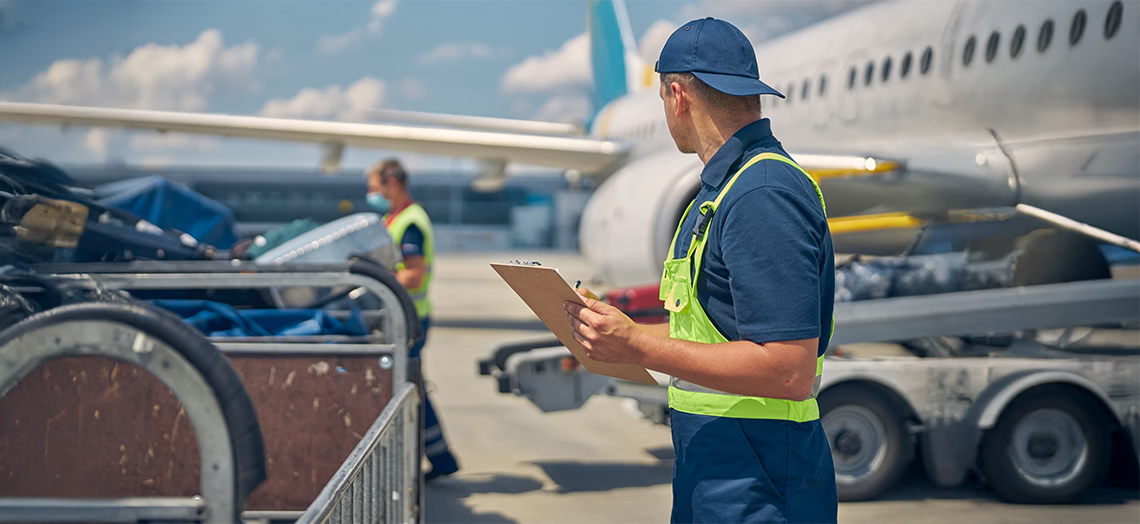
At an airport, the answer is everywhere. It is in the baggage crew lifting and sorting. It is in the maintenance technician inspecting a machine most of us trust without understanding. It is in the security worker repeating the same instructions for hours because safety depends on consistency, not novelty. It is in the person calculating load and balance so takeoff happens within safe limits. It is in the people fueling, cleaning, preparing, checking, clearing, and coordinating while everyone else is focused on departure times. When people search terms like airport ground staff duty time, they are often really asking something larger: what does this job ask of a person? The answer is usually a lot. Aviation does not pause for weekends, family dinners, or long holiday mornings. Many of these roles run on shifts across nights, weekends, and holidays because airports do not have the luxury of ordinary hours. Someone is working while someone else is waving goodbye at drop-off. Someone is still on the ramp while someone else is already posting from the hotel.

Some of the most essential jobs in aviation are also the least romantic

Some of the most essential jobs in aviation are also the least romantic

There is nothing especially glamorous about loading baggage in bad weather. Or checking an aircraft system under time pressure. Or screening passenger after passenger with patience you do not really have the option to lose.

But glamour is not the measure of importance.

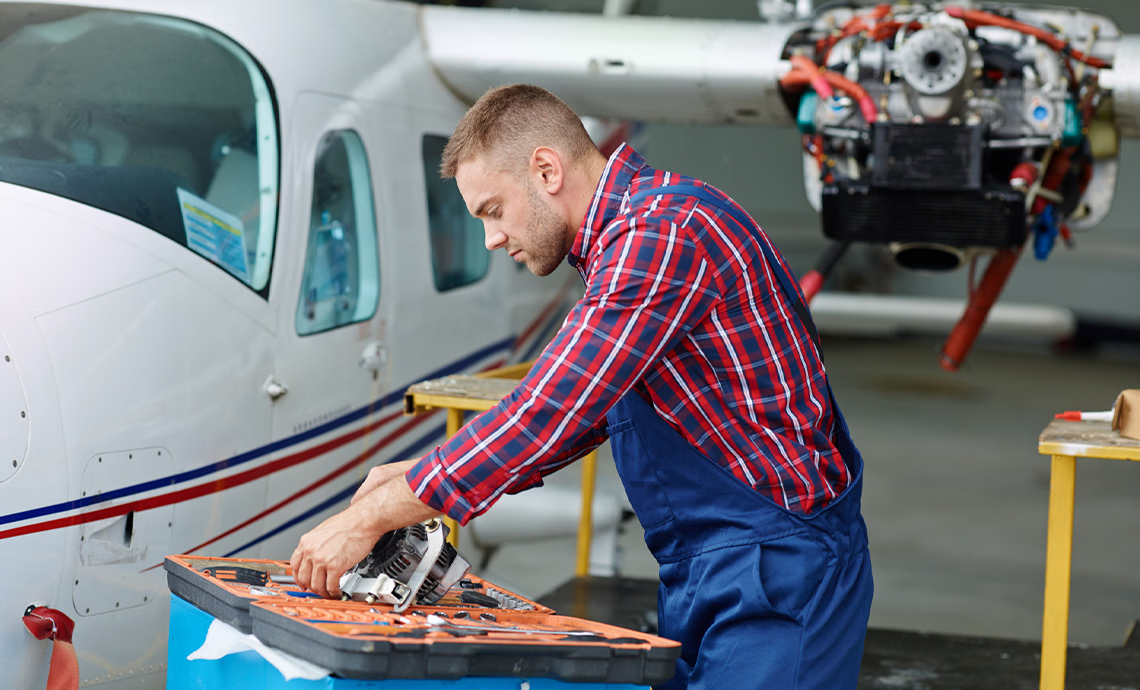
Ground handling staff are the backbone of airport efficiency. They move baggage, cargo, and aircraft through the turnaround. Aviation Maintenance Technicians, or AMTs, do work so essential that the industry sets aside May 24 as AMT Day to honor it. Security personnel keep passengers and operations safe. Engineers and technical teams keep the system functioning. Fueling and catering crews make sure the plane is actually ready to leave. Load controllers work on something passengers rarely think about at all: weight and balance, which may sound like paperwork until you remember it is tied directly to safe takeoff and landing.

These are not decorative roles in the background of aviation. They are structural roles. Remove enough of them, or strain them badly enough, and the polished passenger experience starts to crack.

Why travelers should care

Why travelers should care

At Triwize, we talk about making travel easier. That is what travelers want, and fair enough. But “easy” can be a misleading word. Easy, in travel, is rarely effortless. It usually means somebody else absorbed the complexity.

A simple check-in, an on-time departure, a clean cabin, a smooth baggage transfer, a safe landing, a quick turnaround for the next leg — none of that appears by accident. It comes from labor that is coordinated, disciplined, and mostly unseen.

Maybe that is why airport ground staff are so easy to overlook. They are not usually the face in the campaign or the person in the souvenir photo. They work in fluorescent vests, on tarmacs, in service corridors, around belts, carts, containers, and clocks. They are close to the machinery of travel, which means they are often far from the glamour of it. But if you want to know who makes modern travel possible, you have to start there.

Why this matters beyond one holiday

Why this matters beyond one holiday

Labor Day should not just be about gratitude in a vague, ceremonial way. It should sharpen our attention.

Airport ground staff are part of the infrastructure of movement. Their work affects safety, timing, reliability, baggage flow, aircraft readiness, and the emotional temperature of a trip when things go wrong. And right now, that work matters even more because aviation is under pressure. Labor shortages and operational strain make already demanding roles harder still. Which means the people doing them deserve more than passing appreciation. They deserve respect that is specific.

Respect for the physical work. Respect for the irregular hours. Respect for the technical discipline. Respect for the fact that so much of what passengers call a “smooth trip” is really just good ground work they never had to think about.

Conclusion

This Labor Day, airport ground staff deserve real attention.

They are the people doing the hard, exact, time-sensitive work that keeps flights moving, bags arriving, aircraft ready, and passengers safe. Most travelers will never know their names. Still, every smooth trip depends on them.

The next time a journey feels seamless, it is worth remembering that someone on the ground made it feel that way.

Frequently Asked Questions

What does airport ground staff mean?

It refers to the people who support airport and aircraft operations from the ground side. That can include baggage handlers, ramp workers, cargo staff, airport customer service teams, aircraft service attendants, maintenance technicians, security personnel, and airfield operations specialists.

What is airport ground staff duty time like?

It varies by role, but the work is usually shift-based because airports operate every day. Nights, weekends, and holidays are common across many aviation jobs.

Are airport ground staff careers worth considering?

They can be. Some roles are more entry-level, while others are technical and highly specialized. So when people search airport ground staff careers, they are really looking at a wide range of paths, from customer-facing airport roles to aircraft maintenance and operational work.

Is there one standard airport ground crew uniform?

No. An airport ground crew uniform depends on the role. Customer-facing workers may wear branded uniforms, while ramp and technical teams often wear protective, high-visibility clothing suited to operational environments.

Related Blogs