Triwize Flights
Home/Blogs/US to Europe Flights: How to Avoid Baggage, Seat, and Layover Surprises
US to Europe Flights: How to Avoid Baggage, Seat, and Layover Surprises
International Travel Tips

US to Europe Flights: How to Avoid Baggage, Seat, and Layover Surprises

By Editorial Team
June 25, 2026undefined min read

If you are searching for How to be comfortable on a long flight in economy, start with the part most travelers rush through: the booking page. Comfort on a New York-to-Paris, Chicago-to-Rome, or Dallas-to-London flight is not only about a neck pillow and compression socks. It is also about whether your fare includes a carry-on, whether your seat assignment costs extra, whether your layover gives you enough time, and whether the “cheap” fare still looks cheap after the add-ons.

US to Europe flights can look simple at first. Then the details appear: basic economy restrictions, partner-airline baggage rules, paid seat maps, airport changes, overnight connections, and fare conditions that are easy to miss on a small screen.

Key takeaways

  • • The cheapest US-Europe fare is not always the lowest total trip cost once bags, seats, and changes are added.
  • • For long-haul economy, check carry-on rules, checked bag allowance, seat map fees, meal timing, and layover length before payment.
  • • Basic economy can be fine for light solo travelers, but it is often risky for families, nervous flyers, and anyone carrying checked luggage.
  • • Short layovers in Europe may be stressful if you need passport control, security rescreening, a terminal change, or a partner-airline transfer.
  • • A better-value fare can be worth paying for when it includes one checked bag, seat choice, better timing, or a safer connection.

Table 1: Common US-Europe flight surprises and how to avoid them

SurpriseWhy it happensHow to avoid it
Carry-on is not includedSome basic fares separate cabin baggage from the base ticket.Open the baggage section before checkout and check both operating airline and partner-airline rules.
Checked bag costs more than expectedUS-Europe fares vary by cabin, airline, route, loyalty status, and booking channel.Compare the fare after adding one checked bag each way, not just the first price shown.
Seat selection is paidAirlines often charge for preferred, extra-legroom, aisle, window, or even standard advance seats.Check the seat map before buying, especially for couples, families, and overnight flights.
Layover is too tightSearch results sometimes prioritize price or total duration, not real airport comfort.Avoid very short connections when changing terminals, entering Schengen, or flying on separate tickets.
Basic economy limits flexibilityLow fares often restrict changes, refunds, upgrades, seat choice, and boarding priority.Read the fare conditions line by line before booking, especially for expensive international trips.
Arrival airport is inconvenientSome cheaper flights land late, far from the city, or require a costly transfer.Check arrival time, airport distance, train hours, taxi cost, and hotel check-in timing.

How to be comfortable on a long flight in economy: check the ticket before the pillow

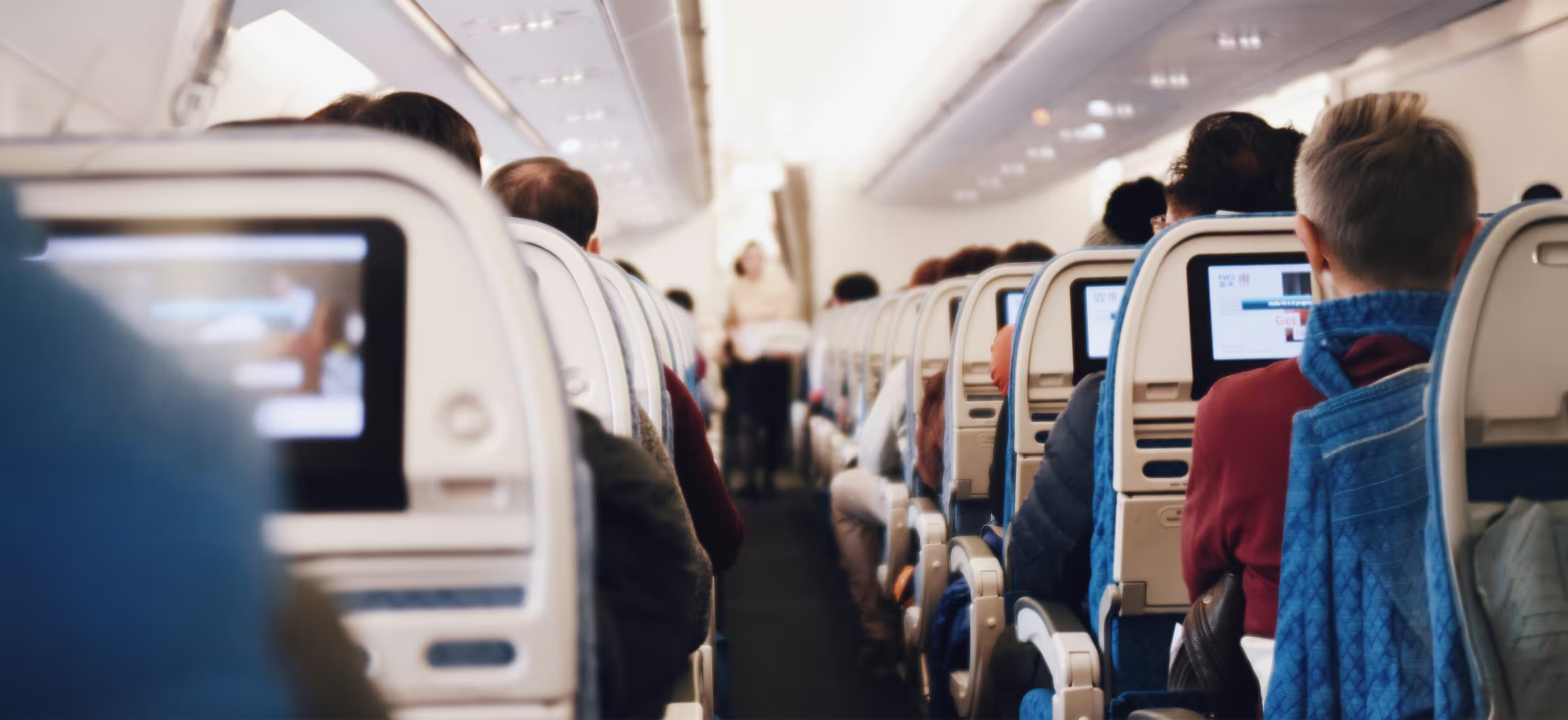
Comfortable Passenger on a long flight

Most long-haul economy advice starts inside the aircraft: hydrate, stretch, wear layers, bring headphones, sleep when you can. All of that helps. But the booking decision shapes the whole trip before you even pack.

A ten-hour overnight flight feels very different when you are stuck in a middle seat, separated from your travel partner, boarding late with no overhead space, and landing with only 65 minutes to clear passport control. The “comfort” decision is hidden in the fare rules.

  • • Will you be able to choose an aisle or window seat in advance?
  • • Can you bring a real carry-on, or only a personal item?
  • • Does the fare include one checked bag for Europe?
  • • Is your layover long enough for the airport you are using?
  • • Will a schedule change, cancellation, or personal emergency leave you trapped in a restrictive fare?

That is why a slightly higher fare can sometimes be the calmer, smarter buy. Not always. But often enough that it deserves a proper comparison.

Table 2: What to check before booking a long-haul economy flight

What to checkWhy it matters on US-Europe flightsGood sign
Baggage allowanceEurope trips often need more than a backpack, especially in winter or for multi-city itineraries.Carry-on plus one checked bag is clearly shown, or the bag fee is easy to add.
Seat selectionOvernight flights are easier when you choose aisle/window early or sit with your group.Seat fees are visible before checkout; no surprise at payment.
Layover airportLarge hubs like London Heathrow, Frankfurt, Paris CDG, Amsterdam, and Madrid can involve long walks or checks.Connection time fits airport size, immigration/security needs, and terminal changes.
Operating airlineA ticket sold by one airline may be operated by another with different baggage or seat policies.The operating carrier is clear on every segment.
Fare conditionsBasic economy and light fares can limit changes, refunds, upgrades, and boarding privileges.Rules are readable before payment, not hidden in a tiny pop-up.
Arrival timingA cheap 11:45 p.m. arrival may lead to expensive taxis or a tired first day.Arrival works with train schedules, hotel check-in, and onward travel.
Total trip costBase fare alone ignores bags, seats, transfers, meals, and change risk.The chosen option wins after add-ons, not only before them.

Baggage surprises: the cheapest fare may not include the bag you actually need

Baggage Surprises

Baggage is where US-Europe fares often stop being simple. A traveler may see a $520 round-trip ticket to Barcelona and assume it works like the international tickets they booked years ago. Then the checkout flow reveals that the fare only includes a personal item, or that the checked bag costs extra each way.

This is not a small side issue. The U.S. Bureau of Transportation Statistics reported that U.S. scheduled passenger airlines earned $1.4 billion from baggage fees on international operations in 2024, plus $172 million from reservation change fees. Fees are part of the economics of air travel, so compare flights with those fees included.

Before booking, check:

  • • Personal item dimensions, not just whether a “bag” is included.
  • • Carry-on size and weight limits. European carriers can be stricter than many US travelers expect.
  • • First checked bag fee each way.
  • • Second checked bag fee if you are traveling for a long stay or with family.
  • • Whether the most restrictive fare blocks carry-on baggage altogether.
  • • Whether the bag rule changes on a partner-operated segment.

Practical example: a Boston-to-Paris fare that is $70 cheaper may lose its advantage if you add a checked bag both ways. For a traveler going to Europe for 10 days, the “bag included” fare may be the better deal even if the base fare looks higher.

Seat selection surprises: long-haul economy is not the place to ignore the seat map

Seat Selection

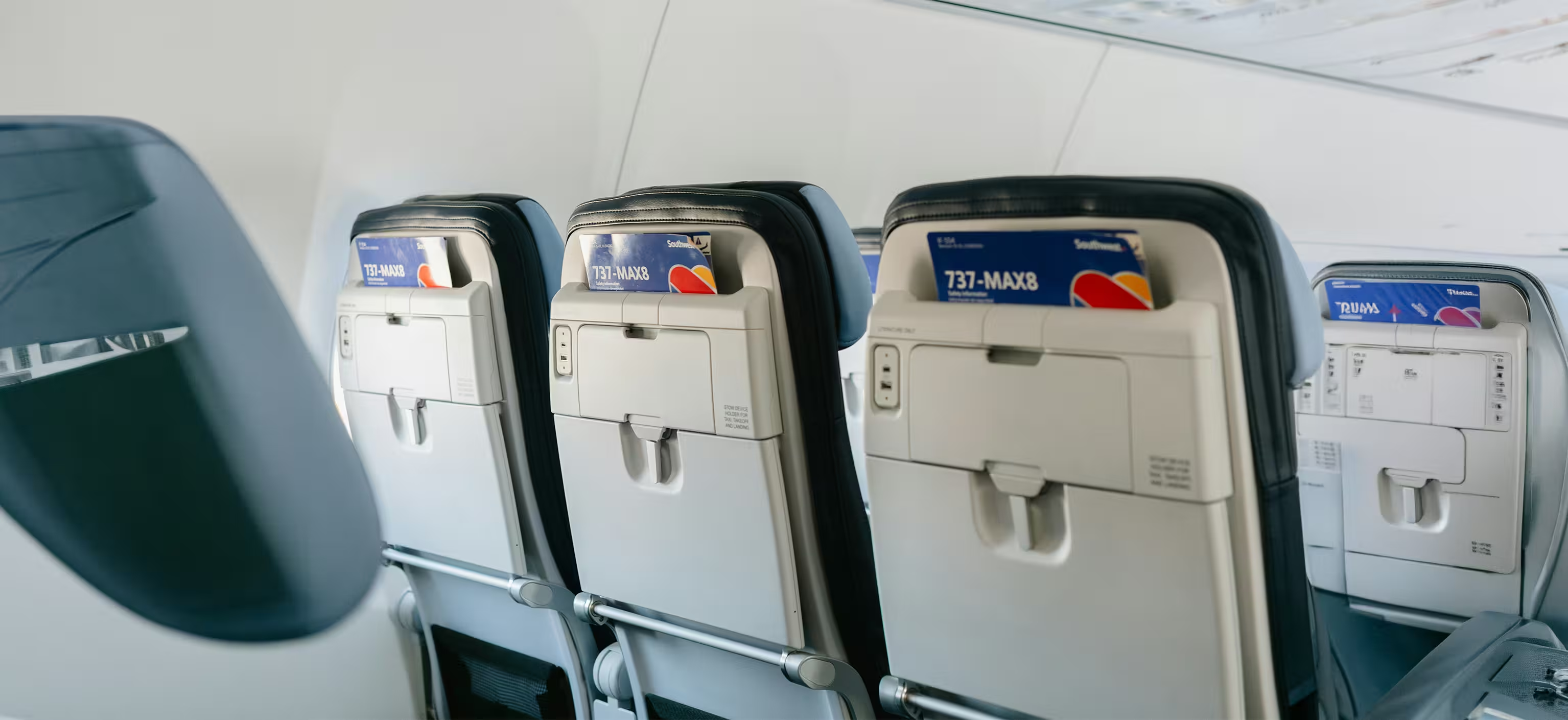
Seat fees feel annoying because they appear after you have accepted the fare. For a red-eye to Europe, the seat matters. An aisle helps with stretching. A window can help with sleep. Sitting with your partner or child can change the whole flight.

The trap is assuming “economy” automatically means you can choose a normal seat for free. Many airlines now separate the cabin into standard seats, preferred seats, exit rows, extra-legroom seats, and sometimes paid advance assignment. Basic economy may assign seats later or restrict selection.

A quick rule: open the seat map before you pay. Do not wait for online check-in unless you are comfortable with whatever is left.

What US travelers should check on the seat map

  • • Is advance seat selection free or paid?
  • • Are aisle/window seats priced differently?
  • • Are you being shown an exit-row seat with restrictions?
  • • Can your group sit together without paying extra?
  • • Is the aircraft layout 3-3-3, 2-4-2, or another configuration?
  • • Are there seats near lavatories, galleys, or bassinets that may be noisier?
Layover

Airline systems can sell connections that meet minimum connection time rules. That does not mean the connection feels good in real life. Europe adds moving parts: passport control, Schengen/non-Schengen transfers, security checks, bus gates, long walks, and terminal changes.

For example, a US traveler flying Chicago to Rome through Frankfurt may need to clear passport control in Frankfurt before the intra-Europe leg. A traveler flying New York to Athens through London may deal with a different airport process because the UK is outside the Schengen Area. A low-cost onward flight on a separate ticket may require collecting baggage and checking in again.

Be more cautious when:

  • • Your connection is under 90 minutes at a large European hub.
  • • You are arriving from the US and connecting to a Schengen-zone destination.
  • • Your second flight is operated by a different airline.
  • • You booked separate tickets to save money.
  • • You must collect and recheck bags.
  • • You are traveling with kids, seniors, mobility needs, or a tight cruise/train connection.

A longer layover is not always wasted time. Sometimes two hours and 30 minutes is exactly what makes the first day of your Europe trip feel less chaotic.

Compare total trip value, not just the cheapest fare

The best flight is not always the cheapest one. It is the one that fits your luggage, schedule, tolerance for risk, and need for comfort. This is especially true for Europe, where a “cheap” ticket can become expensive through bags, seats, transport, and lost time.

Table 3: Cheap fare vs better-value fare comparison

ItemCheap fare exampleBetter-value fare example
Base fare$540 round trip$640 round trip
Carry-onPersonal item onlyCarry-on included
Checked bag$75 each wayOne checked bag included
Seat selection$35-$70 each way for decent seatsStandard seat selection included or cheaper
Layover65 minutes at a major hub2 hours 20 minutes at the same hub
ArrivalLate night, fewer transport optionsAfternoon arrival, easier hotel transfer
Real trip feelCheaper upfront, more friction laterHigher upfront, fewer surprises

The numbers above are illustrative, but the thinking is useful. Add the likely extras before you decide. A fare that looks $100 cheaper can lose quickly once you add one checked bag and seat selection both ways.

A practical US-Europe flight booking checklist

Airlines Checklist

The below checklist is devised to make your work a lot easier, and your journey a lot smoother. Don’t forget to make sure you follow:

  • 1. Search with realistic baggage needs. If you know you need a checked bag, price it from the start.
  • 2. Check the fare family name. “Basic,” “Light,” or “Saver” often means fewer included benefits.
  • 3. Open the baggage policy for every operating airline on the itinerary.
  • 4. Look at the seat map before payment, especially for overnight flights.
  • 5. Avoid very tight layovers unless you know the airport well and the ticket is protected.
  • 6. Check whether the itinerary is one ticket or separate tickets.
  • 7. Confirm arrival airport and local transport options.
  • 8. Read cancellation, change, and refund rules before paying.
  • 9. Take screenshots of baggage and fare inclusions after purchase.

Where Triwize fits in

A smarter booking process should help you see the full picture before you pay. Triwize helps travelers compare international flight options with clearer context around routes, fares, and support needs, so the booking decision is not based on the lowest visible number alone.

For US travelers planning Europe trips, that matters. The right flight may have a better layover, baggage that fits your trip, or support when a connection or airline rule gets confusing.

Planning beyond the flight? Triwize already has helpful Europe content, including tips for currency exchange in Europe and ideas for summer cities to visit in Europe. Those are useful next reads once the flight details are sorted.

Final CTA

How to be comfortable on a long flight in economy is not just a packing question. It is a booking question. The right US-Europe flight should fit your baggage, seat needs, connection comfort, and arrival plans. Before you buy the cheapest-looking fare, price the full trip. For clearer options and practical support, compare your next international flight with Triwize.

Frequently Asked Questions

What is the biggest mistake US travelers make when booking flights to Europe?

They compare only the base fare. A cheaper ticket can become more expensive once you add checked bags, seat selection, change fees, airport transfers, or a risky layover.

Is basic economy worth it for US to Europe flights?

Sometimes, yes. It can work for solo travelers with a small personal item and flexible seat preferences. It is usually less ideal for families, long trips, travelers with checked bags, or anyone who wants flexibility.

How long should a layover be for a US to Europe flight?

There is no perfect number, but many travelers are more comfortable with at least two hours at major European hubs, especially when passport control, security, or terminal changes are involved. Separate tickets need even more buffer.

Should I pay for seat selection on a long-haul economy flight?

If sleep, aisle access, sitting with your group, or avoiding a middle seat matters, paying early can be worth it. At minimum, check the seat map before booking so you know the real cost.

Do US to Europe flights usually include checked baggage?

Not always. Many full-service economy fares include one checked bag on transatlantic routes, but “light” or basic fares may not. Always check the exact fare family and operating airline.

How to be comfortable on a long flight in economy without overspending?

Start by choosing a fare that matches your trip. Then pick a decent seat if it matters, pack layers, bring a neck pillow, move during the flight, hydrate, and avoid an itinerary with a stressful connection right after landing.