Triwize Flights
Home/Blogs/Why Are Flights So Expensive Right Now? Hidden Fees, Dynamic Pricing, and How to Book Smarter in 2026
Why Are Flights So Expensive Right Now? Hidden Fees, Dynamic Pricing, and How to Book Smarter in 2026
Flights & Airlines

Why Are Flights So Expensive Right Now? Hidden Fees, Dynamic Pricing, and How to Book Smarter in 2026

By Editorial Team
June 1, 2026undefined min read

Answer first: Flights feel expensive right now because the fare you see first is often not the full price you pay. Airlines now separate the ticket from the extras: bags, seat selection, flexibility, early boarding, Wi-Fi, and sometimes even the right to bring a full-size carry-on. Add dynamic pricing, fewer easy ways to reach a real person, and confusing refund rules, and a simple flight search can feel like a trap.

The good news: you can still book smarter. You just need to compare the total trip cost, understand the fare rules before checkout, and know when a human travel advisor can save you time, stress, and sometimes money.
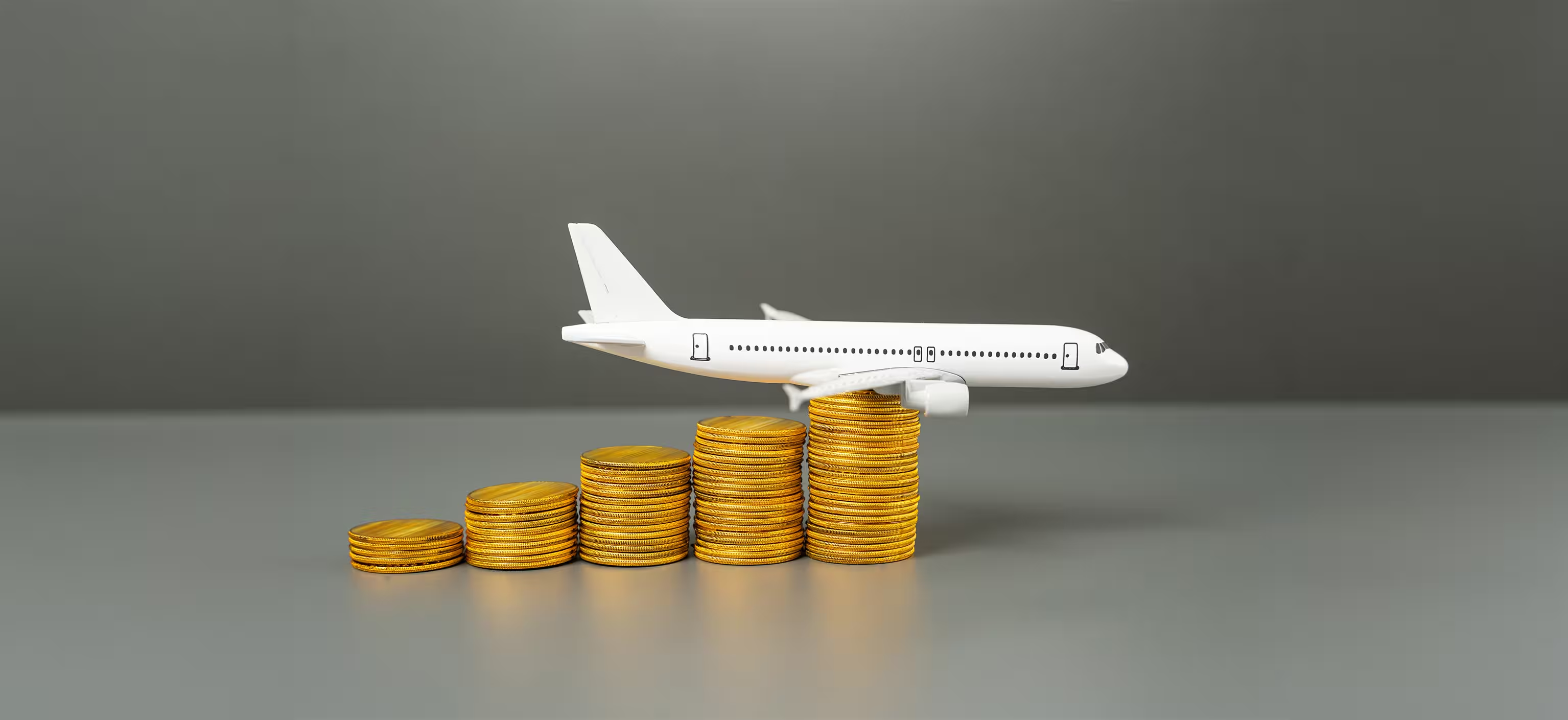

The $229 Fare Is Not Always a $229 Trip

A lot of US travelers start with the same thought: “I just need a cheap flight.” So they open a few tabs, compare prices, and click the lowest fare. It feels logical. It also creates the exact moment where airlines win.

The cheapest fare often wins the click. The real cost shows up later.

That $229 ticket can become $315 after one checked bag, a seat assignment, and a small flexibility upgrade. If you are traveling with a spouse, kids, or a group, the gap gets worse. A family of four can easily add hundreds of dollars before the confirmation page loads.

This is not always a scam. It is fare unbundling. Airlines show a low base fare, then price the rest of the travel experience separately. Bags, seats, boarding position, changes, cancellation flexibility, and food can all become add-ons. The problem is not that add-ons exist. The problem is that travelers are trained to compare the wrong number.

Triwize takeaway: Never compare flights by base fare alone. Compare the total cost for the way you actually travel: bags included, seats considered, realistic connection times, and enough flexibility for your plans.

Why Flight Prices Keep Changing

Why Flight fares change

One reason people search “why are flights so expensive right now” is that flight prices do not behave like normal prices. You can see one fare at breakfast, think about it during lunch, and find it $80 higher by dinner. That does not mean you imagined the first price. It means airline pricing moved.

Airlines use dynamic pricing. Fares can shift based on seat inventory, demand on that route, competitor pricing, seasonality, special events, holiday windows, booking channel, and how close you are to departure. The closer the flight date gets, the less forgiving the system usually becomes.

The biggest mistake is treating flight prices like a game you can always beat by waiting. Sometimes fares drop. Often, especially within three weeks of travel, they rise. The better move is to know your comfort range, set fare alerts, compare nearby airports, and book when the total price makes sense.

Simple rules that help:

  • Set Google Flights or Hopper alerts if your dates are not final.
  • Check one or two nearby airports, especially for major metro areas like New York, Los Angeles, Chicago, Dallas, San Francisco, and Washington, DC.
  • Search flexible dates. A one-day shift can change the fare more than any coupon code.
  • Do not wait too long once you see a fare you are comfortable paying.
  • Compare the final cart price, not just the search-results price.

The Airline Fees That Surprise Travelers Most in 2026

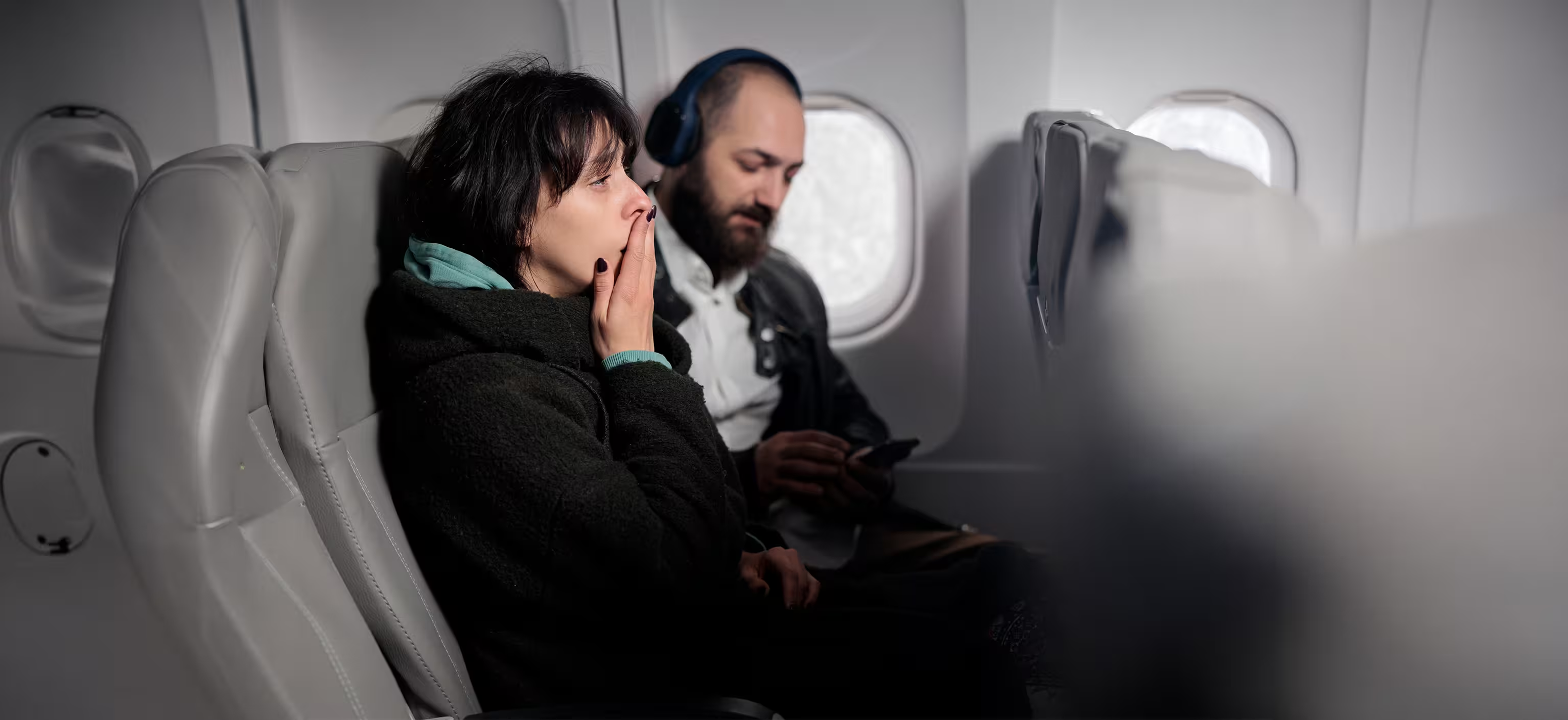
Surprised Passenger

Hidden airline fees are not always literally hidden. They are often disclosed late, scattered across several checkout screens, or written in a way most people do not slow down to read. That is why they still feel hidden when the final total jumps.

The most common surprise costs are checked baggage fees, carry-on restrictions on cheaper fares, seat selection charges, basic economy limitations, priority boarding, Wi-Fi, and change rules. A fare can look cheaper because the airline has removed things you assumed were included.

Baggage is the easiest place to lose money. Some airlines charge for the first checked bag. Some restrict full-size carry-ons on the lowest fare. Some waive bag fees only for elite members, co-branded credit card holders, or higher fare types. Even Southwest, long known for free checked bags, changed its universal bag-free model, so travelers should not rely on old assumptions.

Before you book, ask three questions:

  • Am I allowed a full-size carry-on, or only a personal item?
  • How much is the first checked bag each way?
  • Will I have to pay to sit with my travel companion or child?

Triwize takeaway: The cheapest flight is not the one with the lowest first number. It is the one that gets you where you need to go with the fewest unpleasant add-ons.

Basic Economy Can Be a Good Deal - But Only for the Right Traveler

Basic Economy Struggles

Basic economy is not automatically bad. It can work well if you are traveling alone, packing very light, do not care where you sit, and are confident your plans will not change.

But for many travelers, basic economy is where the “cheap flight” becomes expensive. You may not get free seat selection. You may board later. You may face stricter change rules. You may not get the same baggage allowance. You may also end up paying extra for the things you thought were normal parts of flying.

For families, older travelers, business travelers, international trips, weddings, cruises, honeymoons, and trips with tight connections, basic economy is often not worth the stress. A slightly higher main cabin fare can be the smarter buy because it protects the actual trip, not just the ticket price.

Flight Canceled or Changed? You May Be Owed Cash, Not Credit

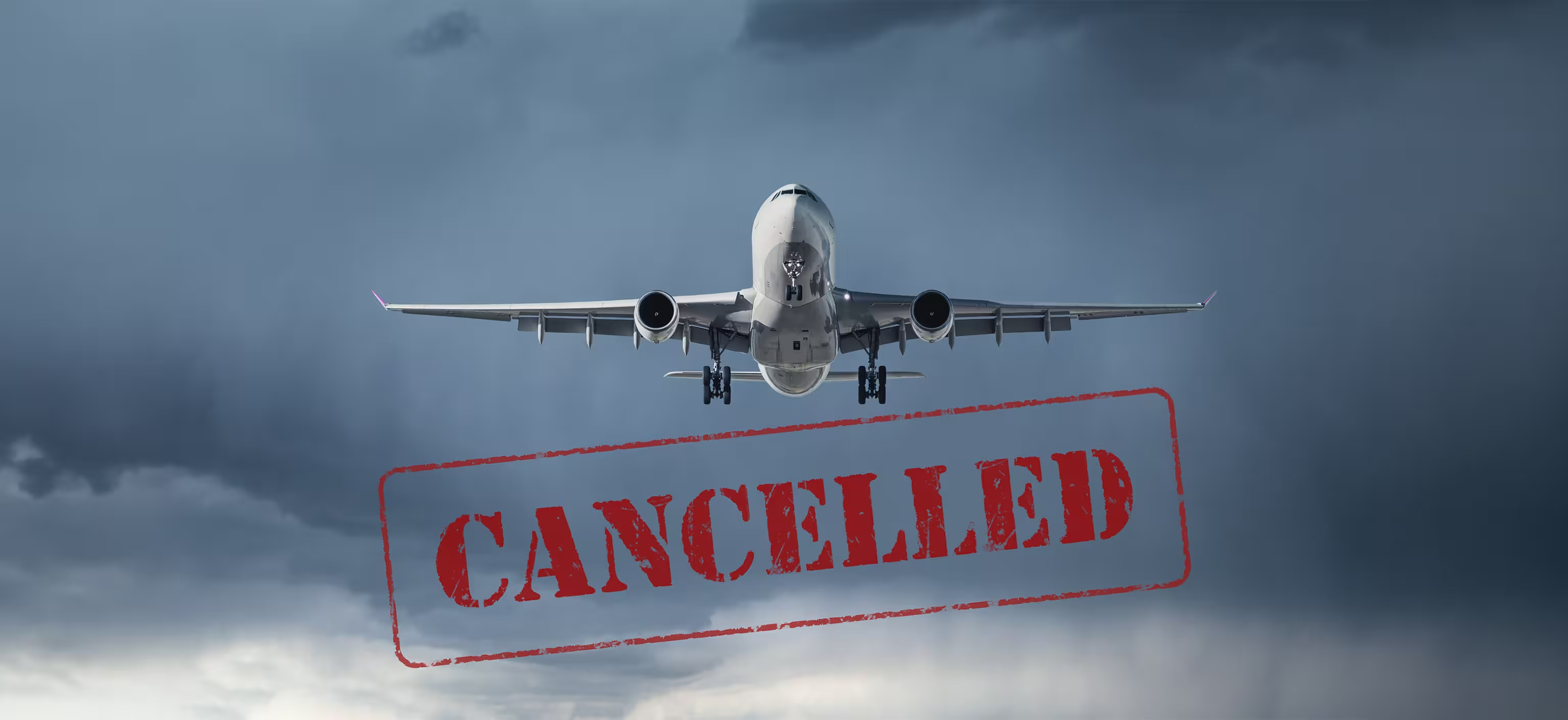
Flight Cancelled

Here is one area where travelers have more power than they often realize. Under the US Department of Transportation’s automatic refund rule, passengers are entitled to a cash refund when an airline cancels or significantly changes a flight and the passenger does not accept the changed itinerary, rebooking, or alternative compensation. The DOT defines significant changes to include a domestic flight arriving three or more hours later than scheduled, or an international flight arriving six or more hours later than scheduled.

That matters because airlines often make travel credits easy to accept. Cash refunds can feel harder to find. If your flight qualifies and you do not want the replacement itinerary, say clearly: “I want a refund to my original form of payment, not a travel credit.”

You may also be owed refunds for paid extras the airline did not provide, such as seat selection or Wi-Fi. Keep your receipts, take screenshots, and save every email. If the airline does not cooperate, use the DOT Aviation Consumer Protection complaint process.

Triwize takeaway: When disruption hits, knowing the rule is only half the battle. The other half is having someone who knows how to push the process forward.

Booking Direct vs OTA vs Travel Advisor: What Works Best?

OTA Vs Travel Advisor

There is no one perfect place to book every flight. The best choice depends on the trip.

Booking directly with an airline can be clean for simple domestic round trips. You may have fewer layers to deal with if you need to change the flight. You can also manage the reservation directly through the airline app.

Online travel agencies can be useful for comparing options or bundling flights with hotels. Sometimes they show competitive package pricing. But when a schedule changes, a refund is delayed, or a connection falls apart, you may find yourself stuck between the OTA and the airline.

A travel advisor makes the most sense when the trip has moving parts: international travel, family vacations, multi-city routes, group trips, cruises, honeymoons, senior travel, complex connections, or any journey where a mistake would be expensive.

That is where Triwize fits. Triwize is built for travelers who want the convenience of modern flight search with the backup of real human support. The goal is not just to find a fare. The goal is to find the right fare after bags, seats, flexibility, connection risk, and support are considered.

How Triwize Helps You Avoid Flight Booking Mistakes

Triwize Agent

Most booking sites are built to make the transaction fast. Triwize is built to make the decision clearer.

A Triwize advisor can compare total trip cost, flag baggage and seat-selection traps, explain fare rules in plain English, and help you avoid routes that look cheap but create a high risk of missed connections. That is especially useful when you are booking for more than one person, flying internationally, or traveling during peak periods.

Triwize also gives you something airline chatbots cannot: a real person to contact when plans change. If your flight is canceled, your connection breaks, or the refund process gets messy, you are not alone in a phone queue trying to decode airline policy in real time.

Plain-English promise: Triwize helps you understand what you are actually paying for before you book, and helps you deal with the airline when things do not go according to plan.

A Smarter Flight Booking Checklist for 2026

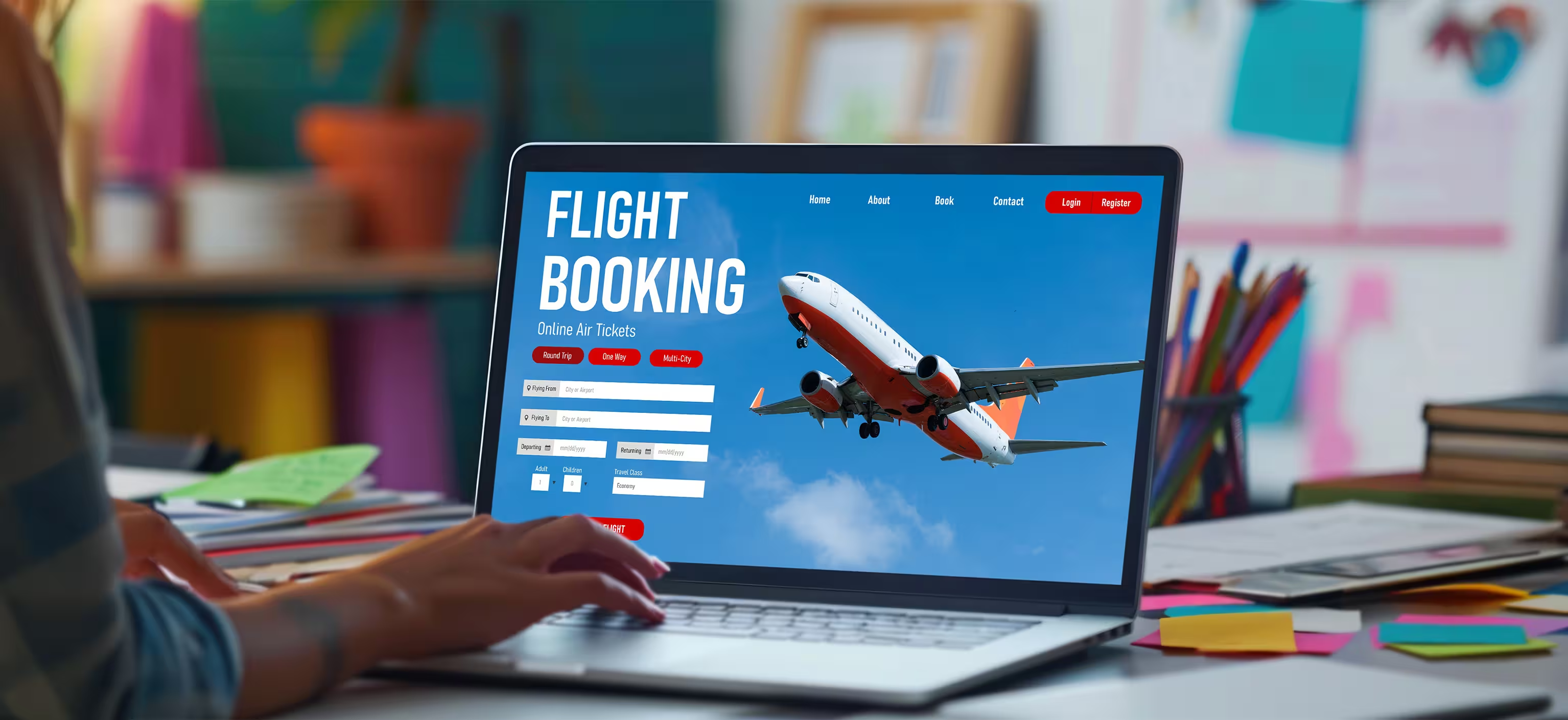
Flight Booking Checklist

The cheat code to booking cheap flights and having a smoother flight experience lies way beyond that just knowing the goldilocks window. Make sure to follow the checklist mentioned below and you will see the difference for yourself:

Before you search

  • Decide whether your dates are flexible.
  • Know whether you need checked bags, carry-ons, or assigned seats.
  • Set a real budget that includes fees, not just the ticket.
  • Check whether your credit card includes trip delay, baggage, or cancellation protection.

While comparing flights

  • Look at the total price after bags and seats.
  • Compare nearby airports and flexible dates.
  • Watch for basic economy, saver, or light fare labels.
  • Check connection times. A cheap 38-minute connection can become a very expensive mistake.
  • Do not assume yesterday’s fare will come back.

Before checkout

  • Read the baggage policy.
  • Confirm whether seat selection is included.
  • Review cancellation and change rules.
  • Save the fare rules and confirmation page.
  • Ask for help if the itinerary has multiple moving parts.

Conclusion: So, Why Are Flights So Expensive Right Now?

Flights are expensive because travelers are not just paying for transportation anymore. They are paying for an unbundled travel experience, priced by algorithms, wrapped in fine print, and often supported by automation when something goes wrong.

That sounds frustrating because it is. But it does not mean travelers are helpless.

The smartest travelers in 2026 are not simply hunting the lowest fare. They are asking better questions: What is the total trip cost? What happens if the flight changes? Can I bring the bag I need? Will my family sit together? Who helps me if the airline app fails?

Those are the questions Triwize helps answer before you pay.

Ready to book without second-guessing every fee?

Talk to a Triwize travel advisor before your next trip. You will get clear pricing, human support, and practical guidance on the route, fare, and booking option that actually fits your plans.

Frequently Asked Questions

Why are flights so expensive right now?

Flights feel expensive because airlines increasingly separate the base ticket from extras such as bags, seats, flexibility, and boarding options. Dynamic pricing also changes fares based on demand, seat inventory, competition, and timing. The best way to compare flights is by total trip cost, not the first fare shown in search results.

How can I avoid hidden airline fees?

Start by checking baggage rules, carry-on limits, seat selection costs, and change rules before checkout. Avoid choosing basic economy unless you understand its restrictions. Compare the final price after all required extras are added.

Is basic economy worth it?

Basic economy can be worth it for a solo traveler who packs light, does not care about seat assignment, and is unlikely to change plans. It is often a poor fit for families, group travel, international trips, tight connections, and travelers who need flexibility.

Should I book directly with the airline or use a travel advisor?

For a simple domestic round trip, booking direct can work well. For international trips, multi-city routes, family travel, honeymoons, group travel, or trips with expensive consequences if something goes wrong, a travel advisor can add real value.

Can I get cash back if my flight is canceled?

In many cases, yes. Under DOT rules, if an airline cancels or significantly changes your flight and you do not accept the alternative itinerary or compensation, you are entitled to a refund to your original form of payment.

Does using Triwize cost more than booking online?

Not necessarily. The real value is that Triwize helps compare the complete trip cost, catches fee traps, explains fare rules, and provides human support if plans change. For many travelers, that support is worth more than chasing the lowest visible fare.